
Most Customer Success organizations are built to protect what they have. Prevent churn. Maintain satisfaction scores. Deepen relationships with the contacts already in the account. These are legitimate priorities, and the metrics that reinforce them — NPS, CSAT, renewal rate, NRR — are the ones most CCOs report to the board.
The problem is that this orientation is structurally blind to the signals that drive expansion. Not because CSMs lack skill or motivation, but because they are trained, measured, and incentivized to look in the wrong direction. They are watching the relationship. The expansion opportunity is hiding in the account’s external news feed and product analytics.
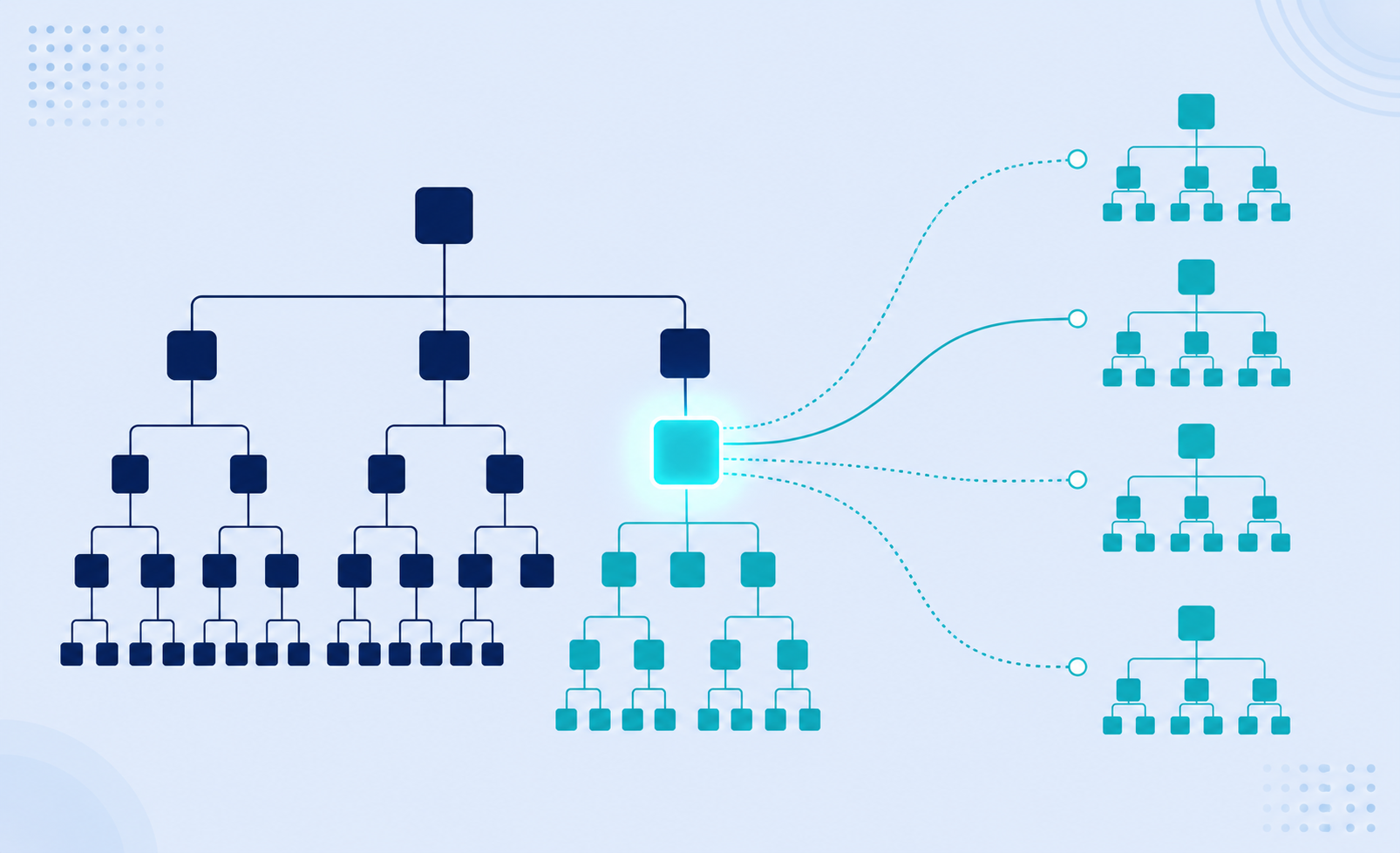
Customer-Led Growth changes that orientation. It reframes the existing customer base as the primary engine of revenue growth — not just a retention problem to manage, but a signal-rich environment to mine for precisely timed expansion plays. The Signal-Based Revenue System is the operational layer that makes CLG real. And for CCOs and VP Customer Success leaders, building that layer starts with understanding why their teams are currently missing the signals that matter most.
Why CSMs Miss the Signals
A typical CSM workday is organized around relationship maintenance and issue resolution. They are preparing for QBRs, following up on support tickets, tracking adoption metrics, and managing the renewal calendar. These activities are necessary. They are also consuming enough attention that the signals sitting just outside the account relationship go unnoticed.
External signals — a leadership change at the account, an acquisition announcement, a new strategic initiative — rarely surface in CSM workflows. Nobody is monitoring for them. The CSM learns about the new Group CTO when the executive sponsor mentions it in passing three months after the appointment. By then, the window for a proactive expansion conversation has already closed.
Internal signals are closer at hand but almost equally invisible. Product usage data lives in the analytics platform. Support ticket trends live in the helpdesk. Contract details live in the CRM. None of these systems are configured to surface expansion signals automatically, and CSMs are not typically trained to read them that way. They look at usage to confirm health, not to detect opportunity.
The result is a Customer Success function that is genuinely good at protecting the base and genuinely poor at growing it. Not because the people are wrong, but because the system is not designed for expansion. Signal-based expansion changes the system.
The Signal Catalog for Customer Success
Building a signal-based expansion motion starts with the same exercise described in How to Build Your Signal Catalog — but applied to the existing customer base rather than the prospect universe.
Sit with your best expansion deals from the last twelve to eighteen months. What was happening inside those accounts in the ninety days before the expansion conversation began? What had changed? What was announced? What showed up in the product data that, in retrospect, was pointing at the opportunity?
The answers will fall into two categories: external signals and internal signals. A healthy expansion signal catalog covers both, in roughly a sixty-forty split. External signals tend to be higher confidence and more time-sensitive. Internal signals are more continuous and require a different kind of monitoring.
External Signals: The Ones CSMs Are Not Watching
External signals for existing accounts are identical in structure to external signals for prospects — observable business events that change the account’s context, priorities, or buying potential. The difference is that in an existing account, you have established credibility and insider knowledge that makes the signal far more actionable.
Leadership changes with expanded mandate.
A CTO promotion is a standard enough event that most CS teams note it and move on. But the details matter enormously. A CTO promoted to Group CTO and Chief Data Officer carries a fundamentally different signal than a lateral move. The expanded mandate — group-wide technology leadership plus data ownership — almost certainly means a broader infrastructure review, a new data strategy agenda, and budget that did not exist in the previous role.
For KnowledgeOps, a fictitious content management software company we use throughout this series, this signal is particularly relevant. A customer contact promoted to Group CTO and Chief Data Officer is now responsible for content and data infrastructure across a larger organizational footprint. The KnowledgeOps deployment that served one division is suddenly sitting inside an executive portfolio that spans multiple divisions with their own content management problems. The conversation that follows should be about expansion, not retention — and it needs to happen within weeks of the appointment, not at the next scheduled QBR.
The outreach takes the form of a congratulatory message that acknowledges the expanded role and opens a conversation about what the new mandate means for the team’s infrastructure priorities. The credibility of an existing relationship makes that conversation natural. Missing the signal makes it reactive, defensive, and far less likely to succeed.
M&A activity.
A customer that announces an acquisition is one of the highest-value signals in an existing account. The content consolidation problem that follows a merger is exactly the pain KnowledgeOps solves — and a customer who has already deployed the platform in one part of the organization is the warmest possible prospect for an expanded deployment covering the acquired entity.
The CSM who catches this signal within days of the announcement can reach out with a specific, practical offer: a scoping conversation based on their experience with the original implementation, a guide to content consolidation after a merger, and a clear articulation of what the expansion would look like. The CSM who misses it until the next QBR finds the customer has already started evaluating options — sometimes including competitors — because nobody from KnowledgeOps showed up when the problem became urgent.
Most CSMs learn about M&A activity from the customer, not from monitoring. That is the gap. External signal monitoring for existing accounts should be configured identically to external signal monitoring for target prospects — the same tools, the same alerts, the same routing logic. The only difference is the play that fires when the signal is detected.
Internal Signals: The Data That Is Already There
Internal signals are behavioral indicators that emerge from within the account’s interaction with your product and your team. They are closer at hand than external signals and in some ways more precise — they reflect actual usage behavior rather than inferred intent. But they require a different kind of attention to surface as expansion signals rather than health indicators.
Geo-based usage patterns. This is one of the most underused expansion signals in B2B software. Most product analytics platforms track usage by user, by feature, and by volume. Fewer teams track usage by geography or organizational unit in a way that surfaces expansion potential.
For KnowledgeOps, the signal looks like this: the platform was deployed for the North American content team. Over the past quarter, product analytics show a cluster of logins from IP addresses in Germany and Singapore — markets where KnowledgeOps has no formal deployment. The users are not part of the original implementation. They are colleagues of the core team who have started using the platform informally, likely because someone recommended it or shared access.
That pattern is an expansion signal hiding in the product analytics. A division or geography is using the product without a formal deployment, which means there is both an opportunity and a risk. The opportunity is a structured expansion conversation with the relevant stakeholders in those markets. The risk is that informal usage without proper implementation limits adoption and creates a poor experience that could undermine the core relationship.
The CSM who catches this signal has a natural, non-pushy reason to reach out: “We noticed some usage patterns from your EMEA and APAC teams — we wanted to make sure they are getting the most out of the platform and understand what support they might need.” That conversation almost always surfaces an expansion opportunity, because the reason those users are on the platform is that someone in the organization already sees the value and has been sharing it informally.
Catching this signal requires configuring product analytics to surface geographic and organizational unit breakdowns, and routing anomalies — usage from unexpected locations or user groups — as alerts to the CSM rather than just data points in a dashboard.
Building the CSM Workflow Around Signals
The structural challenge is that signal detection requires a different workflow than relationship management. Most CSMs do not have time to monitor external news feeds, parse product analytics for anomalies, and manage their existing QBR and renewal cadence simultaneously. The answer is not to add signal monitoring to the CSM’s plate. Signal detection belongs to the system. Signal response belongs to the CSM.
This is where RevOps plays a critical role in the expansion motion. The same signal detection infrastructure that supports new business prospecting — external monitoring tools configured against the signal catalog, product analytics alerts, CRM triggers — should extend to the existing customer base. When a signal fires on an existing account, it routes to the CSM the same way a new business signal routes to an SDR: with a clear description of what was detected, why it matters, and what play to run.
The CSM’s role is the outreach, the conversation, the expansion scoping — the work that requires the relationship skills and account knowledge that CSMs genuinely have. The system surfaces the signal and hands the CSM a reason to reach out.
This also requires a shift in how CS leadership thinks about metrics and incentives. A CS team measured primarily on NPS, CSAT, and renewal rate will not naturally prioritize expansion signal response. Adding expansion ARR and signal-triggered pipeline as explicit CS metrics — and connecting compensation to them — changes the orientation without requiring a wholesale restructuring of the team’s skills or identity.
What Ambient Sensing Looks Like in Practice
The term Ambient Sensing describes the capability to continuously read what is changing inside and around your accounts without requiring manual effort at each step. It is the infrastructure underneath signal-based expansion — the system that watches so the CSM does not have to.
For KnowledgeOps, a mature Ambient Sensing capability means that when their customer’s CTO gets promoted to Group CTO and Chief Data Officer, the CSM receives an alert within forty-eight hours with context about the new role, a suggested outreach message, and a link to the relevant expansion playbook. When geo-based usage anomalies appear in product analytics, the CSM receives a summary of which regions are showing activity, how many users are involved, and what a structured expansion conversation in those markets might look like.
The result is a CS team that appears remarkably attentive to their accounts — not because they are monitoring everything manually, but because the system is surfacing the moments that matter and making it easy to respond. That attentiveness is what distinguishes a CS organization that drives NRR from one that merely protects it.
Where to Start
Begin with the retrospective. Pull your last ten to fifteen expansion deals and map what was happening in those accounts in the ninety days before the conversation began. Identify the two or three signals that appear most consistently — those are your tier-one expansion triggers.
Configure external monitoring for your existing account base using the same tools and alert logic you use for prospect monitoring. Add geographic and organizational unit breakdowns to your product analytics and set anomaly alerts for unexpected usage patterns. Route both signal types to the CSM with context and a suggested play, not just a notification.
Then change one metric. Add signal-triggered expansion pipeline to your CS team’s dashboard alongside NPS and renewal rate. Measure it for one quarter. The number will be small at first. It will grow as the system matures and the team learns to respond.
Signal-based expansion works alongside the relationship motion that makes Customer Success valuable — ensuring those relationships are activated at the moments that matter most, before the window opens rather than after it closes.
Ready to build a signal-based expansion motion? A6 Group works with CCOs and VP Customer Success leaders to design expansion signal systems and connect them to Customer-Led Growth operating models. Reach out to start the conversation.